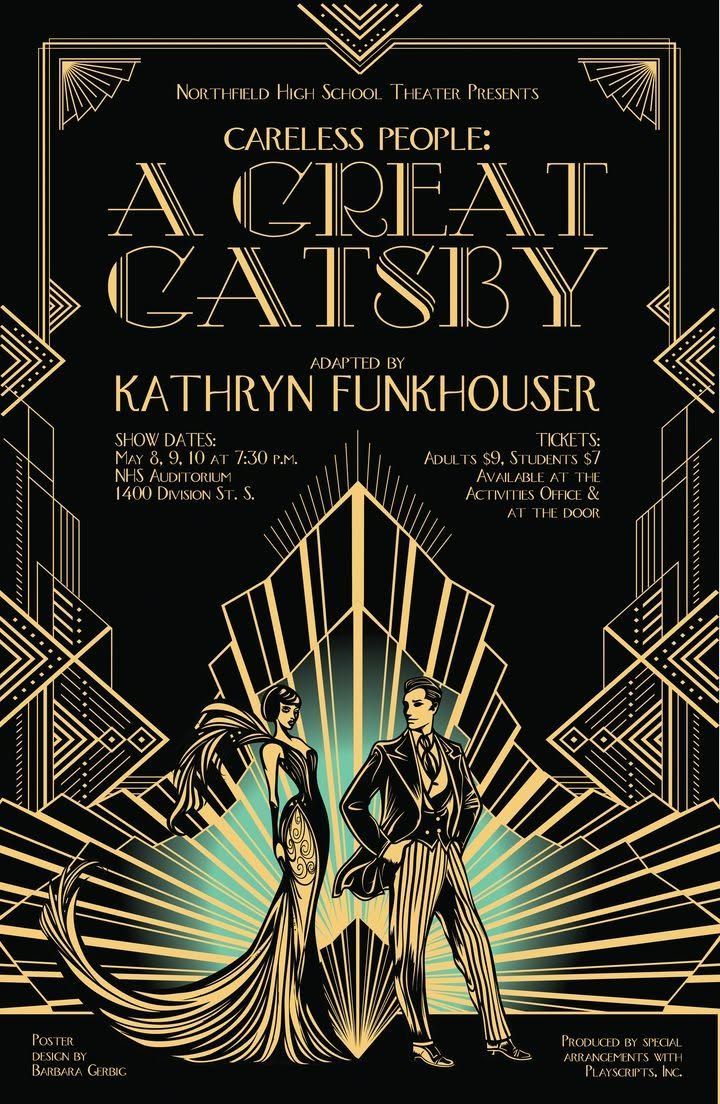
Careless People: A Great Gatsby
“Gatsby's party is over, but Nick Carraway is the one who has to clean up. It's not easy to gather the empty glasses and abandoned shoes when each evokes a memory, and the memories aren't easy to sweep away either - especially not when Jordan Baker remembers them differently. Can't repeat the past? Why, of course you can. Armed only with a few enchanted objects and the glittering words of F. Scott Fitzgerald, a shape-shifting ensemble creates the world of The Great Gatsby in this fiercely theatrical adaptation” (Concord Theatricals).
Written by: Karey Kirkpatrick, Wayne Kirkpatrick, and John O'Farrell
Directed by: Shari Setchell
Stage Managed by: Aurelia Graves
Elements
- Cast of 20, Crew of 8
- First Play: stage managing and cue calling
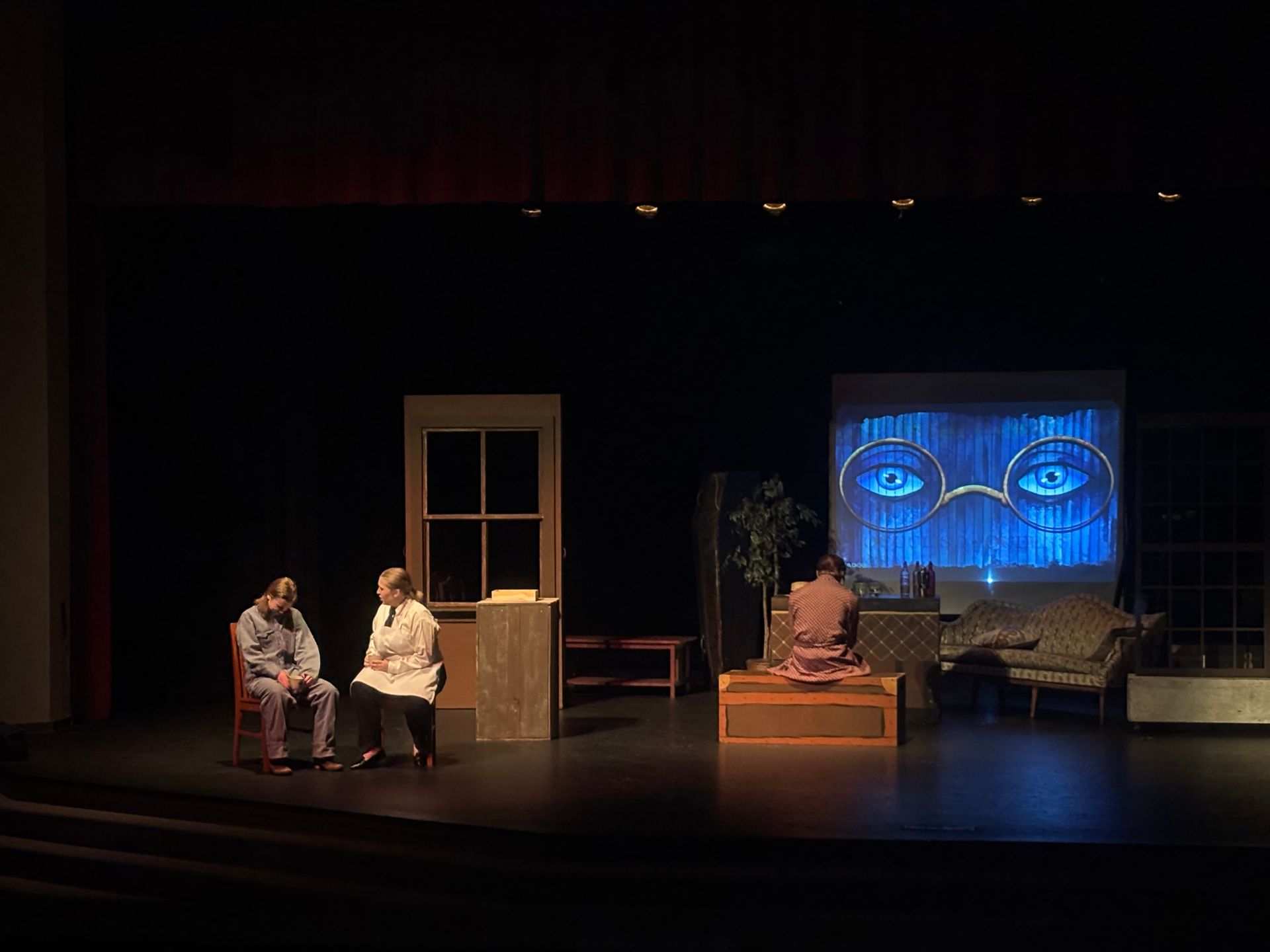
- Rear projection
Rehearsal Process
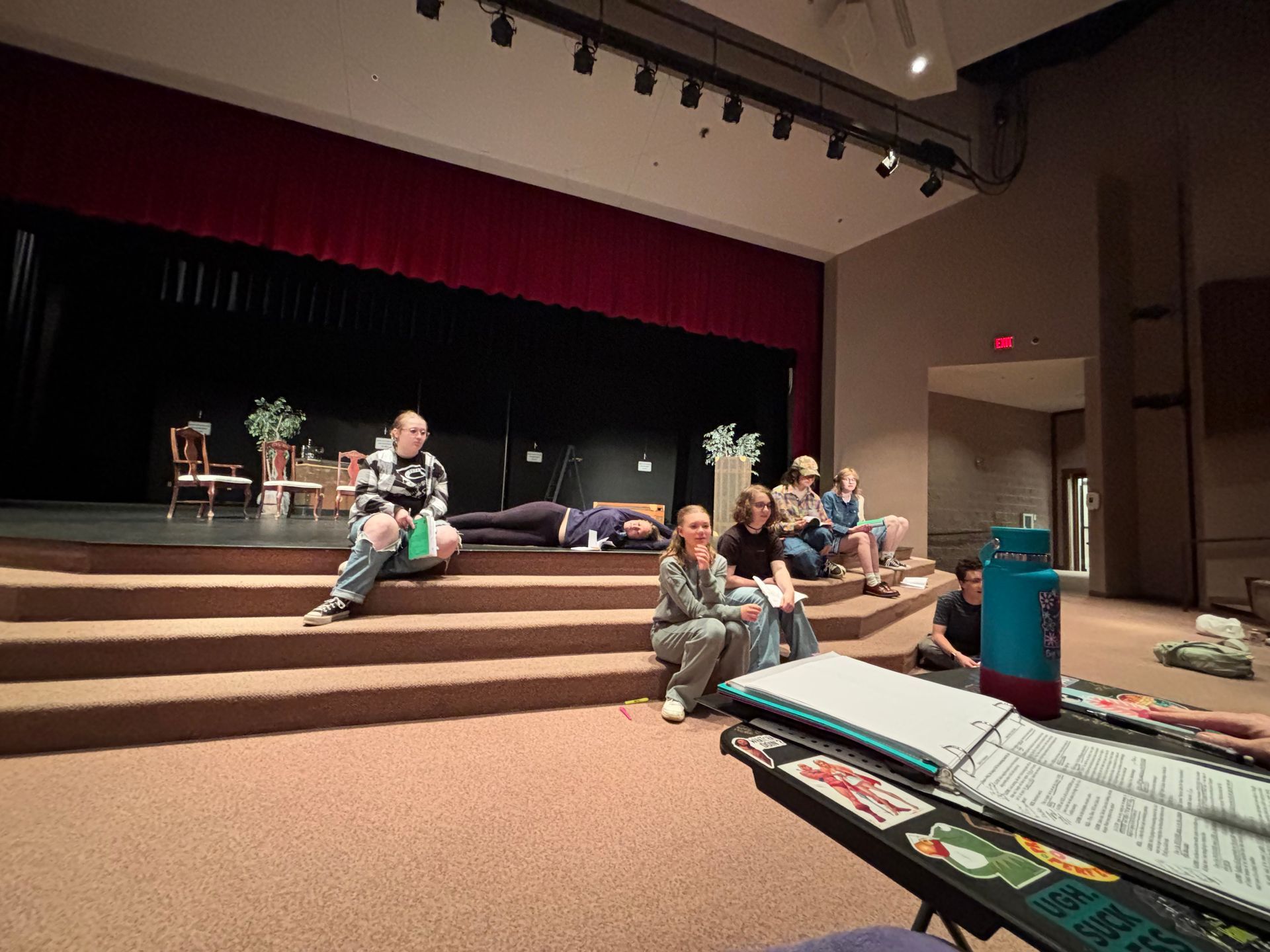
Careless People: A Great Gatsby was the first play I ever SM'd; it was with a different director than Something Rotten. I like the challenge of learning how different directors work with their SMs. For example, Shari (the Director) hates rehearsal reports and student SMs doing the paperwork; however, she expects SMs to write in blocking changes. The importance of working with different people can't be understood until you have. It pushes you to grow, and I am thankful I've worked with over 10 directors as an actor & a technician.
Blocking & Spike
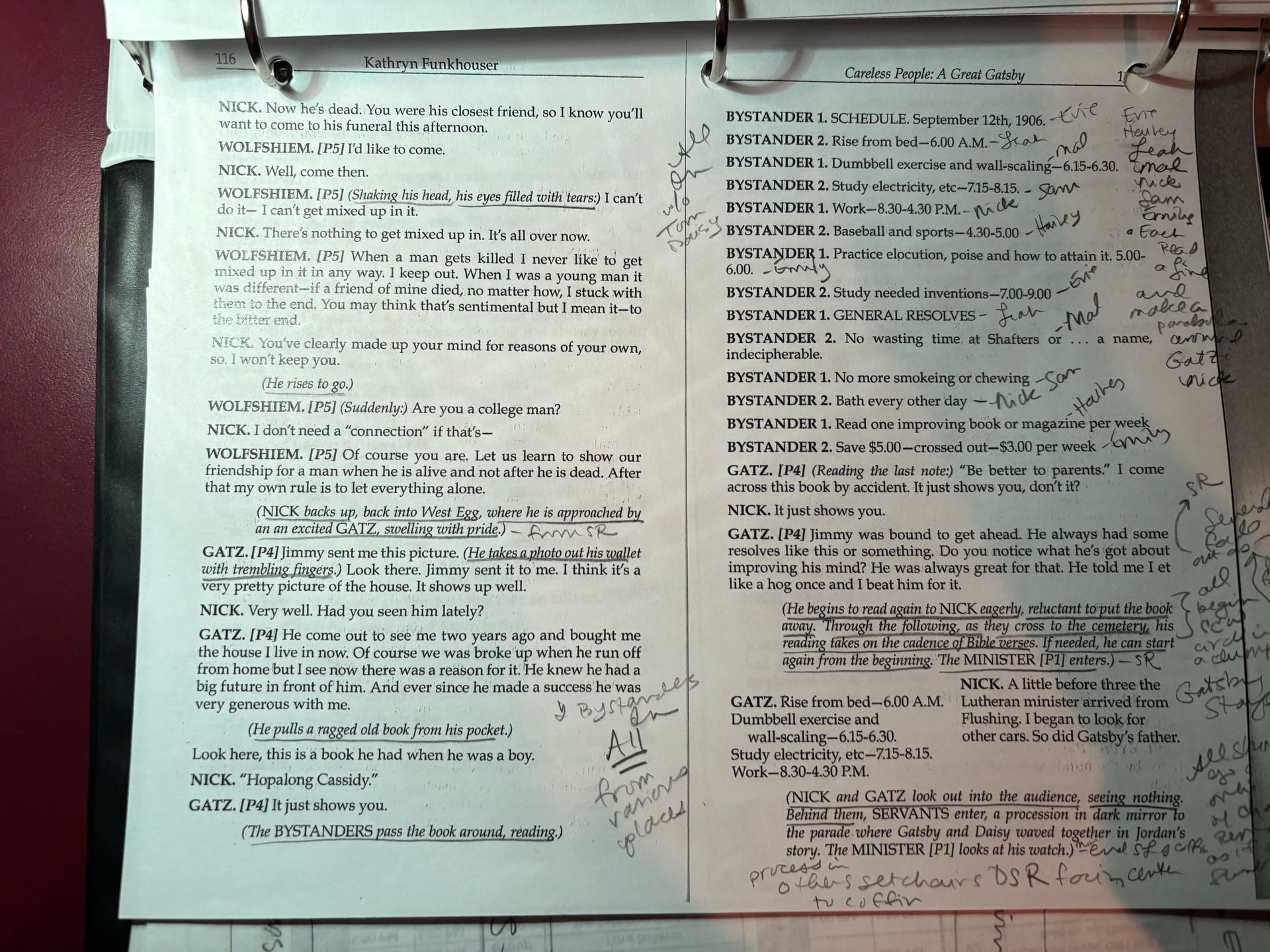
Gatsby is the heaviest blocking show I've ever done. The photo of the script illustrates the complex blocking. We had to get chairs in a line that looked pretty and could be replicated, without spikes. We, as a creative team, knew spikes would make it easier, but it would be noticeable to the audience. After the first month, we got rid of the spikes.
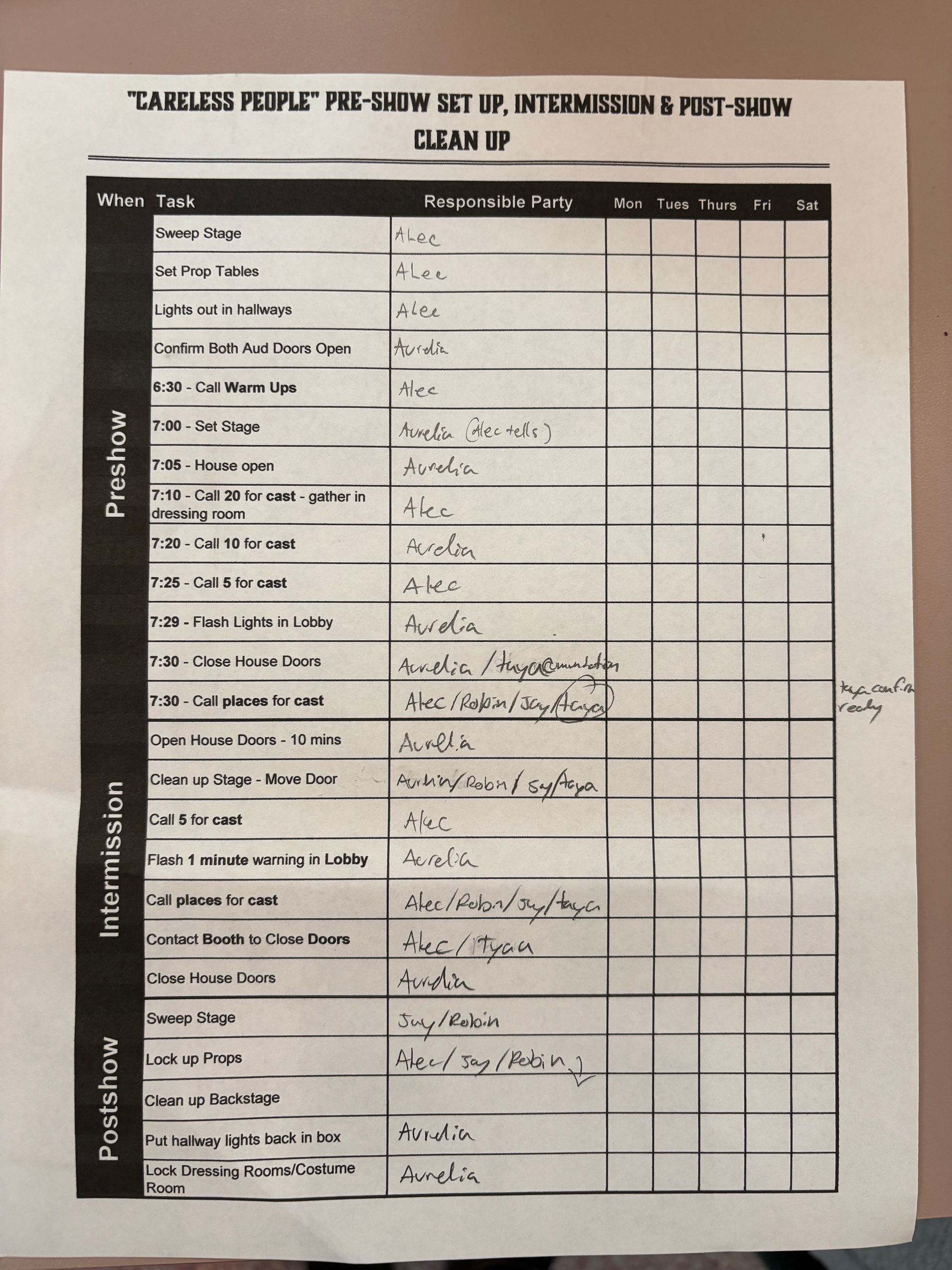
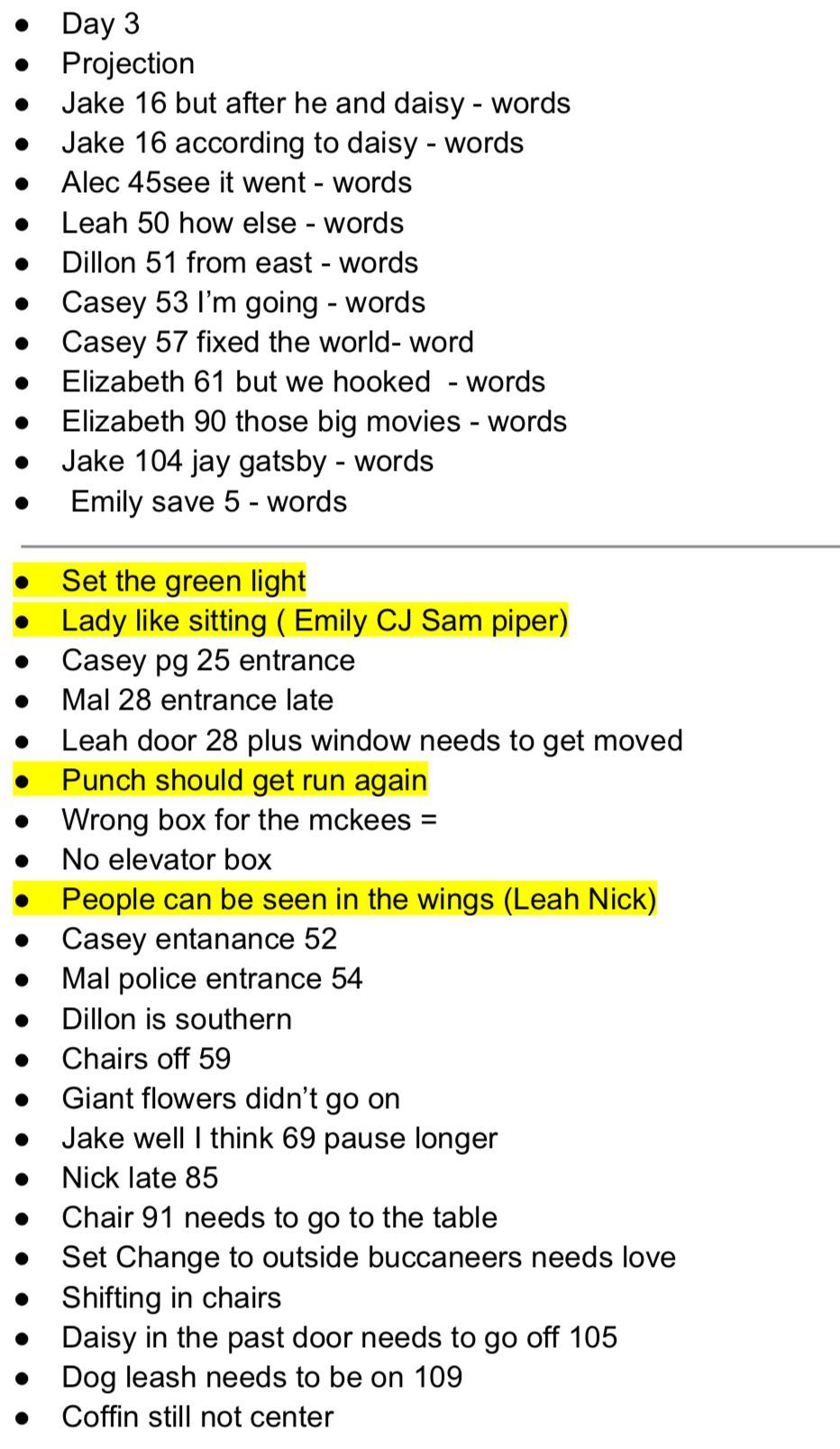
Paperwork
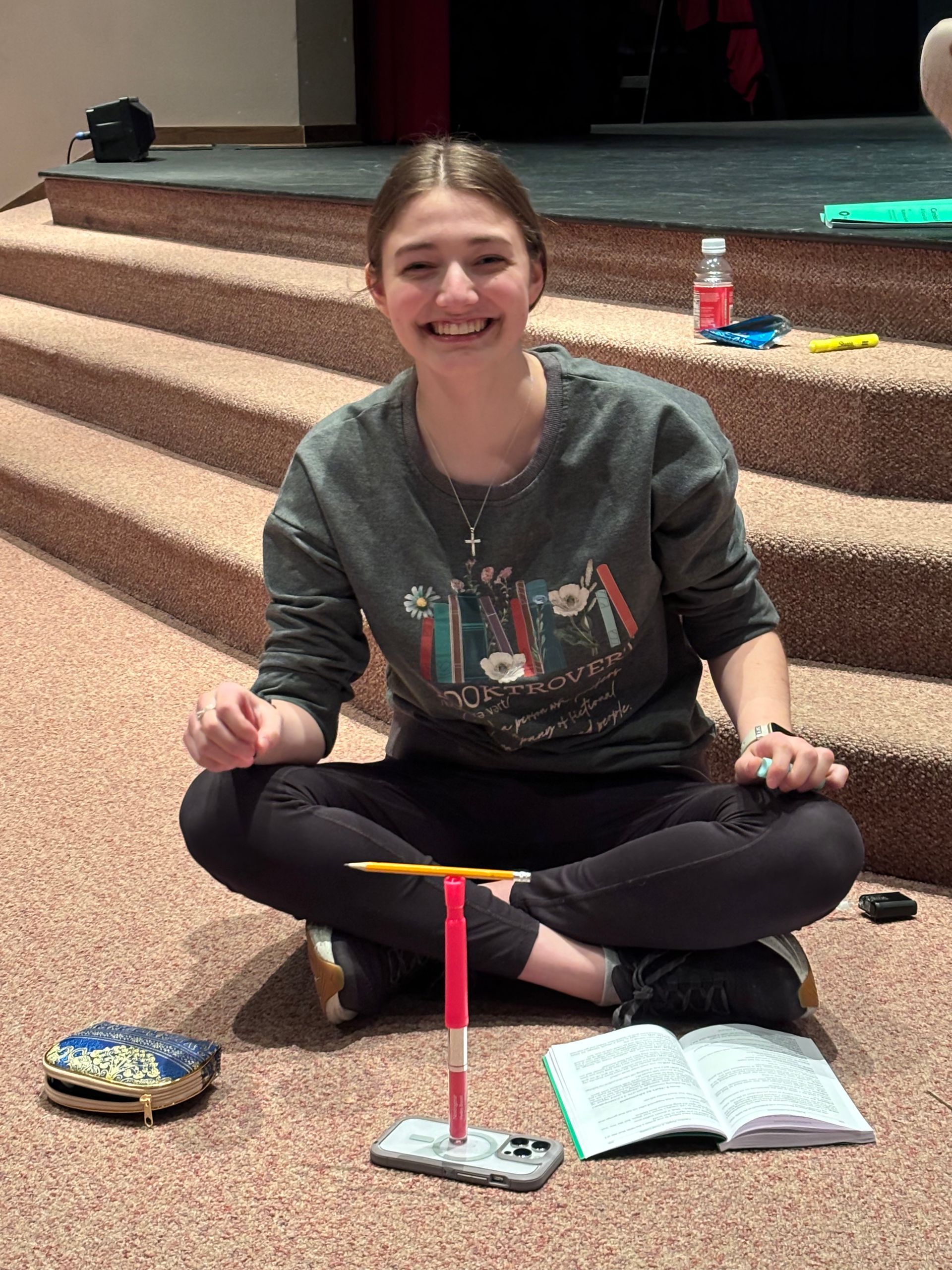
Previously, none of my directors had cared much for structured documentation, blocking notes, or organized feedback on rehearsal. They operated from sticky notes and in-the-moment conversations. Knowing I wanted to pursue stage management professionally, I asked the Director of Careless People if I could try my hand at paperwork. She gave me a crash course the basics on how; from there, I did my own research, watched some YouTube videos, and learned as we went. I was grateful for the Director's willingness to let me try this and her grace when it was clunky. The Director delegated my giving notes directly and running rehearsal in her absence. I also did the lighting design and decided to incorporate specials. When we programmed them, we had a techie stand in so we could estimate the performers' heights and movements.
Rear Projection
Our backdrop had to transform into different settings quickly. The most efficient solution was rear projection and an open set. During one performance, the WiFi cut out four times; for the next show, we hardwired the laptop to the projector to ensure no disruption.